SILT
- 4.6
- Rating
- 1.00M
- Installs
- Free
- Price

 Analysis by App-foxy
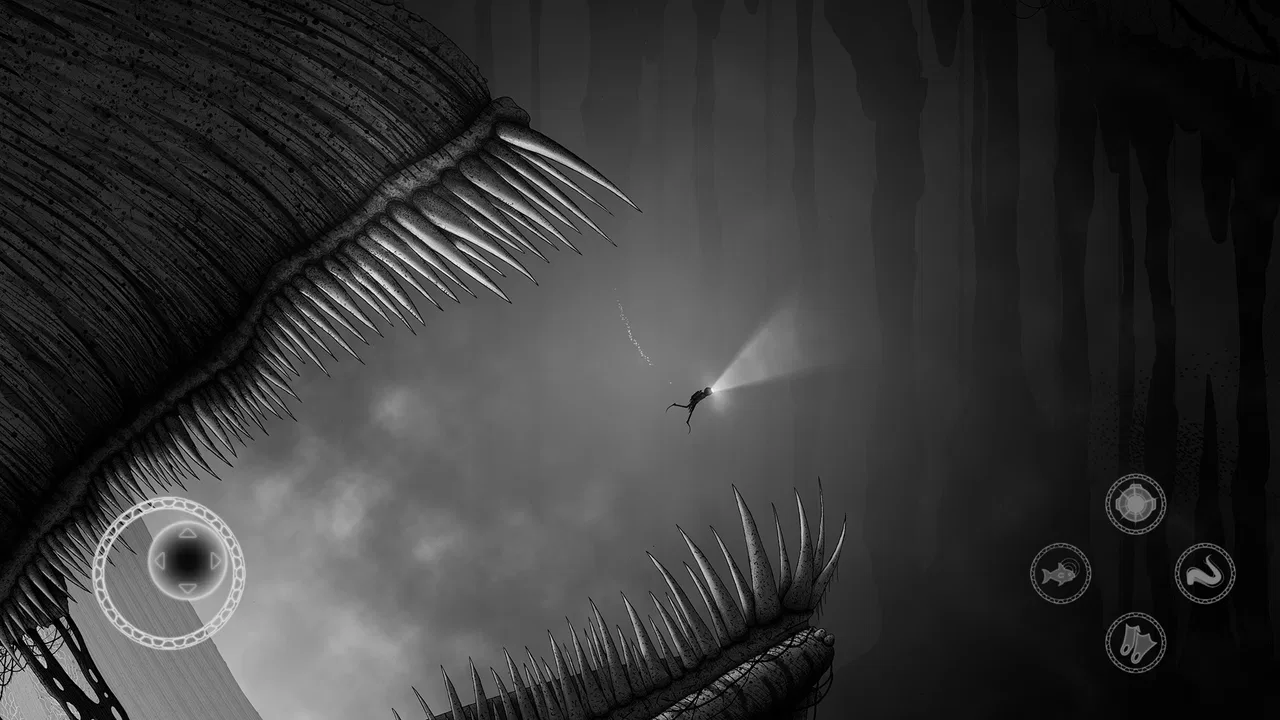
I went into SILT expecting a conventional underwater adventure, but its strongest quality is how quickly it makes the ocean feel unfamiliar. The game drops me into a surreal abyss where progress depends less on collecting obvious rewards and more on reading strange creatures, dangerous spaces, and environmental clues. It is a free adventure game from Snapbreak, aimed at Teen players, and it works best when I give it my full attention rather than treating it as something to play casually while distracted.
The central idea is simple to explain but more interesting to use: I can possess creatures and use their abilities to solve puzzles. That action becomes the foundation for everything else. I enter an area, test what the surrounding life can do, notice the result, and then decide whether I have learned enough to move forward. When I fail, the game encourages another attempt because the failure usually teaches me something about timing, positioning, or the relationship between creatures and the environment.
How the abyss turns one action into a complete play loop
I find that the loop makes more sense when I treat each encounter as a small chain of decisions, not a single trick to guess: observe the space, choose a creature, act, then read what changed. That approach helps me separate useful feedback from atmosphere and makes a stalled puzzle easier to think through. Next, I look at what the opening setup can teach me about playing comfortably.
You May Also Like

 Blood Strike: 2.5 Anniversary
Blood Strike’s Loadouts Turn Every Drop Into a Tactical Gamble
A close look at Blood Strike’s custom loadouts: how fast access to signature weapons reshapes its battle royale rhythm, rewards preparation, and narrows the gap between fights.

 Pandora - Music & Podcasts
Pandora’s Music Is Easy to Start, but Harder to Recover
Pandora’s strength is its low-effort path from a seed to a station. Its weak spot is how much confidence it asks you to place in connection, setup, and quiet recovery.

 8 Ball Pool
 Is Built on Rivalries, Rematches, and Routine
A close look at the rivalries, rematches, shared routines, and unanswered safety questions that turn a quick pool match into a persistent mobile community.

 Samsung Music
’s Quiet Strength Is Playing What You Already Own
Its reach comes less from spectacle than from dependable access to a personal library. That simplicity is both the app’s strongest retention engine and its ceiling.

 AccuWeather: Weather Radar
AccuWeather Review: A Quick, Clear Forecast for Everyday Decisions
For everyday plans, the best forecast is the one you can understand quickly. AccuWeather makes rain timing, radar, and local conditions easy to act on, with a few trade-offs.

 Hill Climb Racing
Why Hill Climb Racing Still Turns Crashes Into One More Run
A tiny car, a bumpy hill and one more upgrade: Hill Climb Racing keeps resurfacing because its simple chaos makes every near-miss feel personal.
More From Our News Desk
View All News


The first action is observation before movement
My first useful habit in SILT was slowing down. The instinct in many adventure games is to move immediately toward the next visible object, but here that can make the scene harder to understand. The abyss is presented as a place to investigate, so I get more from each area when I look at the creatures, the paths around obstacles, and the objects that appear to react to my actions.
Possessing a creature is not just a button press that solves a problem automatically. It changes how I approach the room. I have to consider which creature is useful, when to take control, and what its movement means for the rest of the puzzle. That makes the first action feel like a question: what can this creature do here, and what does the environment expect me to notice?
This is where the game separates itself from a typical action-focused underwater title. I am not simply swimming through enemies or following a bright trail from one objective to the next. The setting asks me to interpret it. Even when the solution is straightforward in hindsight, reaching that understanding is part of the reward.
Feedback comes from consequences rather than constant explanation
The most satisfying rhythm comes from trying something and watching the world answer. A creature may alter my route, interact with a hazard, or reveal how a nearby obstacle should be approached. The feedback is strongest when I can connect the outcome to my own decision instead of receiving a large instruction panel telling me what to do.
That design also creates the game’s main source of friction. If I miss the visual relationship between a creature and an object, I can spend longer than expected repeating actions that were never likely to work. I appreciate that SILT does not flatten every puzzle into a checklist, but players who prefer immediate explanations may find the quiet presentation frustrating.
My advice is to treat each failed attempt as a small experiment. Change one thing at a time: possess a different creature, approach from another angle, or wait for the environment to settle before acting. Making several random moves at once can hide the useful clue. The game becomes clearer when I use failure to isolate a cause rather than simply restarting and hoping for a different result.
The reward is understanding, not a crowded inventory
SILT’s rewards feel tied to discovery and access. I do not play it for a large equipment system or a long list of collectible upgrades. The pleasure comes from recognizing the solution, passing through a previously confusing section, and seeing the strange underwater world reveal another layer of its logic.
That makes the game particularly suitable for players who enjoy atmospheric puzzle adventures. Someone looking for constant combat, character statistics, or a large progression tree may find the experience too focused. The game’s reward structure is quieter: I feel successful because I understand the space better than I did a few minutes earlier.
There is also a useful psychological effect in the possession mechanic. Instead of thinking only about my own movement, I start thinking through the behavior of another creature. That change in viewpoint gives familiar puzzle actions a more unsettling character. The ocean is not just a backdrop; its inhabitants become part of the toolset and part of the mystery.
Resetting a session does not erase what I learned
When an attempt goes wrong, the practical value of a reset is that I can return to the problem with a clearer plan. I may have approached a hazard too early, selected the wrong creature, or misunderstood the order of actions. Starting again is less painful because the important progress is mental. I now know what not to do, and that knowledge makes the next run more deliberate.
This is also why the game can work well in short sessions. If I have a limited break during the day, I can focus on one puzzle or one section instead of needing to commit to a long narrative chapter. A realistic use case is playing for a few minutes in the evening, stopping after a failed attempt, and returning later with the problem still fresh in my mind. The game gives me a reason to begin another session because the unfinished solution remains interesting.
It is not the best choice when I want a completely relaxing game that requires little concentration. The dark atmosphere, unfamiliar creatures, and puzzle uncertainty demand attention. I would also avoid starting it when I am looking for quick, disposable entertainment with obvious goals. Its appeal depends on curiosity, and curiosity is difficult to manufacture when I am tired or impatient.
Why another attempt feels worthwhile
The loop works because each stage feeds the next one. I take an action, receive a visible or practical consequence, gain understanding, and then use that understanding to make a better attempt. The reward is progress through the abyss, while the reset gives me room to correct my approach. That combination is more compelling than simply moving forward without resistance.
One of the less obvious strengths is that the possession idea encourages me to inspect the whole scene rather than stare only at the destination. In many adventure games, the important object is easy to identify and the challenge is reaching it. Here, the useful clue may be a creature’s position or behavior. I have to read the room as a system, which makes even a small area feel more deliberate.
Another useful tip is to avoid assuming that the most visually dramatic creature is automatically the right one. The game’s surreal presentation can draw attention toward the largest or strangest element, while the practical solution may depend on a less obvious interaction nearby. I get better results when I check the whole environment before committing to a plan.
A third trade-off is the relationship between atmosphere and clarity. The unusual visual design helps the abyss feel distinctive, but it can also make functional details less immediate. I sometimes need to pause and separate decoration from information. Players who enjoy examining scenes will likely appreciate this; players who want high-contrast instructions may need more patience.
What the mobile version means for everyday play
On mobile, the game’s focused structure is a good fit for people who prefer self-contained challenges rather than endless progression. I can open it with a specific intention—solve the obstacle I left unfinished, test a creature interaction, or explore the next stretch—and stop when that goal is complete. That is more satisfying to me than games designed around constant daily check-ins.
The free price makes it easy to try without committing money first. At the same time, free access does not make the game universally suitable. The real question is whether its slow, strange puzzle rhythm matches my taste. I would recommend it to a friend who likes atmospheric exploration and wants a game that trusts the player to notice things. I would not recommend it to someone who mainly wants competitive action, fast combat, or a bright and cheerful adventure.
Device compatibility is also reasonably approachable: the game requires Android 8.0 or later. Its current version is 1.0.10, so I would check that my device meets the operating-system requirement before expecting a smooth installation. The game has reached over a million installs and holds a 4.5 average from around seventeen thousand ratings, which suggests that its unusual approach has found a substantial audience without changing what makes it distinctive.
The Teen content rating is worth taking seriously, especially for younger players or families choosing games together. The abyss is built around an unsettling mood rather than a gentle cartoon setting. I found that tone effective because it supports the mystery, but it may not be comfortable for everyone. This is a game I would choose for atmosphere and tension, not for a lighthearted underwater outing.
How it compares with familiar adventure alternatives
Compared with a standard puzzle adventure, SILT gives more importance to possession and creature behavior. A typical alternative may present switches, keys, movable blocks, or clearly defined tools. Here, the living inhabitants of the abyss are part of the problem-solving language. That makes the experience more organic and less mechanical, although it can also make solutions harder to read at first.
Compared with an action adventure, the game is much less interested in constant movement and immediate rewards. I am not pushed forward by a stream of battles or a large upgrade path. The tension comes from uncertainty and the consequences of choosing the wrong interaction. If I want a stronger sense of power growth, another game will likely suit me better. If I want to feel vulnerable while learning an alien environment, this is the more interesting option.
It also differs from endless mobile games that use short sessions mainly to encourage repetition. SILT’s repeated attempts are meaningful because they are connected to a specific puzzle and a specific insight. I am not returning simply to fill a meter; I am returning because I think I understand the problem now. That distinction gives the reset loop a purpose.
Who should play it and who should skip it
I think SILT is a strong match for players who enjoy visual storytelling, unusual worlds, and puzzles that require observation. It is especially good for someone who likes the moment when a confusing scene suddenly makes sense. The possession mechanic gives the game a clear identity, and the underwater setting makes every solution feel slightly strange rather than routine.
I would skip it if my priority is speed. The game asks me to look, test, and reconsider. I would also skip it if I dislike ambiguous puzzle design or become annoyed when a game does not immediately explain why an action failed. The experience is more rewarding when I am willing to experiment, but that same quality can feel like unnecessary friction to a player who wants direct guidance.
For a friend deciding whether to install it, I would suggest approaching the first session as a trial of the loop rather than judging it by the opening minutes alone. Pay attention to whether the first successful creature interaction makes you curious about the next one. If it does, the game’s rhythm will probably grow on you. If the possession mechanic already feels like a chore, later sections are unlikely to change that basic relationship.
My verdict on the action-feedback-reward-reset cycle
SILT succeeds because its core loop has a clear emotional shape. I act, the abyss responds, I learn something, and I try again with a better idea. The reward is not noise or excess; it is the feeling of gaining control over a place that initially seems impossible to read. When the loop clicks, another session begins naturally because the previous attempt left behind a question rather than simple frustration.
Snapbreak has made an adventure game with a specific personality instead of another interchangeable mobile puzzle experience. Its free availability lowers the barrier to trying it, while the 4.5 average and broad install base show that the approach has connected with many players. I would still keep expectations realistic: this is not a fast action game, a collection-heavy adventure, or a carefree casual distraction.
My recommendation is clear: choose SILT if you want a moody, creature-driven puzzle journey that rewards patience and careful observation. Give it time to establish its rhythm, use failed attempts as information, and resist rushing through the scenery. For me, the best reason to return is not merely that there is another area to reach. It is that the abyss keeps presenting a problem I have not fully understood yet.
FAQs for SILT
01What is SILT and what does it offer to users?
SILT is an immersive adventure game that combines puzzle-solving with a unique underwater exploration theme. Players navigate through beautifully crafted environments, encountering various mysteries and challenges. The game offers a compelling narrative, stunning visuals, and a captivating soundtrack that enhances the overall gaming experience.
02Is SILT available on both Android and iOS platforms?
Yes, SILT is available for download on both Android and iOS platforms. Users can find the game on the Google Play Store for Android devices and the Apple App Store for iOS devices, ensuring a broad accessibility across different mobile devices.
03What are the system requirements to run SILT smoothly?
To run SILT smoothly, Android users should have a device with at least Android 8.0, 4GB of RAM, and a mid-range processor. iOS users should have iOS 13 or later, with similar hardware specifications. These requirements ensure that the game runs without lag and maintains high-quality graphics.
04Does SILT offer in-app purchases or ads?
SILT provides a premium gaming experience with no intrusive ads, ensuring uninterrupted gameplay. While the game might offer some in-app purchases for cosmetic upgrades or additional content, these are entirely optional and do not affect the core gameplay experience.
05Can players expect regular updates and new content in SILT?
Yes, the developers of SILT are committed to keeping the game fresh with regular updates. These updates may include new levels, features, bug fixes, and enhancements based on player feedback, ensuring that the game continues to evolve and engage its audience.
Pros
- Intuitive user interface for easy navigation.
- Wide variety of tools for creative projects.
- Seamless integration with popular platforms.
- Frequent updates with new features.
- Community support for troubleshooting issues.
Cons
- Limited free version tools available.
- Occasional crashes on older devices.
- Requires a stable internet connection.
- High subscription cost for premium features.
- Complex features may overwhelm beginners.

SILT
Gallery